

How Restorers Refurbish Furniture From Unheated Storage ?
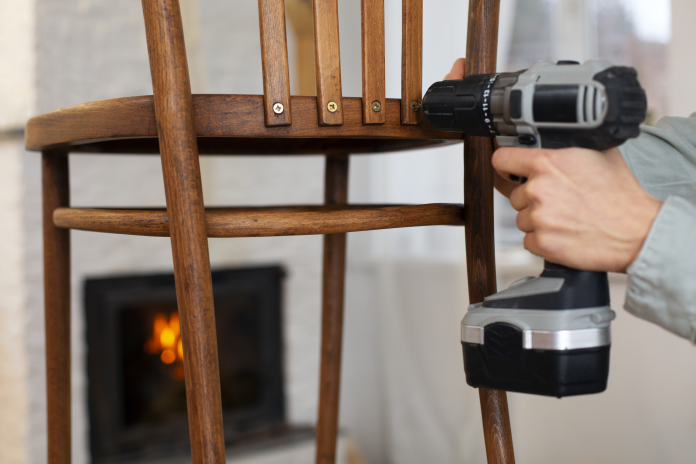
Furniture kept in a loft, garage, shed or outbuilding can deteriorate even when it seems protected from rain and direct damage. Seasonal changes in UK expose timber, veneers, finishes and upholstery to repeated shifts in temperature and relative humidity. Professionals therefore begin furniture refurbishment by assessing environmental damage before deciding how to treat the piece.
1. Assessing the Furniture
The very first step is a detailed inspection. Restorers check the timber for splitting, distortion, staining, veneer lifting and open joints. They test drawers and doors for changes in fit, while inspecting the underside and less visible areas for moisture damage or insect activity.
A moisture meter helps identify abnormal moisture content, although readings must be interpreted alongside the timber species and current room conditions. Restorers also examine old finishes for blistering or crazing. This matters a surface issue will actually indicate movement within the timber beneath it.
The Institute of Conservation recommends keeping relative humidity around 40–60% for furniture. Maintaining reasonably stable humidity can help limit the expansion and contraction that occur when timber repeatedly responds to environmental changes.
2. Allowing Cold Furniture to Acclimatise
Furniture taken directly from the unheated area shouldn’t normally be placed near a radiator or exposed to heat. A rapid change can create uneven moisture movement through different parts of the timber.
A restorer will move the piece into a stable working environment and allow it to acclimatise gradually. This is especially important with antique furniture as old air-dried timber responds significantly to humidity changes. Rapid environmental shifts can cause cracking, joint movement, veneer separation, etc.
3. Repairing the Structure Before Refinishing
Once the furniture has stabilised, structural repairs begin. Loose mortise-and-tenon joints need dismantling, cleaning and re-gluing. Warped components are assessed to determine if correction is possible without forcing the timber.
Veneer is another common problem. Moisture changes cause veneer to lift from its substrate, creating hollow areas or raised edges. Instead of sanding, specialists re-adhere loose veneer using conservation techniques.
This is where professional furniture refurbishment differs from a DIY makeover. Modern conservators recommend minimum intervention, preserving original material and finishes where they remain stable instead of automatically stripping everything.
4. Treating the Finish According to Its Condition
After structural work, the existing finish is checked. Wax finishes require cleaning and selective consolidation, while damaged shellac or lacquer require specialist treatment. Professional restorers avoid assuming that every old surface needs full stripping because an original finish contributes to the furniture’s historical character and value.
The final treatment therefore involves localised colour matching, polishing or surface consolidation rather than a complete refinish.
Restored furniture should be kept away from damp walls, direct sunlight and intense heat to minimise further stress. For pieces stored in lofts, garages or outbuildings, specialist evaluation can identify hidden deterioration and suitable treatment. Professional furniture refurbishment stabilises damage and preserves original features, helping the piece stay usable for a long time.
Corwell Furniture Restorers are experienced furniture makers based in Reading, Berkshire, and have been refurbishing antique and modern furniture since 1980. Drawing on our extensive knowledge, we repair and restore furniture to its proper condition and appearance. Let us handle your next furniture restoration project. The results are guaranteed to leave you awed. Stay tuned to our blogs for more such information.