

How to Choose the Right Treatment for Preserving Antique Furniture
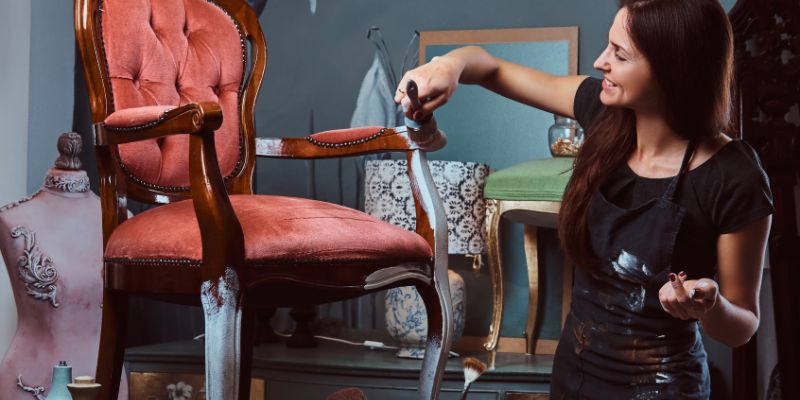
An antique can show its age in subtle ways: through worn finishes and colour changes caused by decades of use. When that character is damaged, the decision simply isn't about making the furniture look new again. Antique furniture restoration should hence begin with deciding how much intervention the piece justifies without compromising its historical significance.
What Is Conservation?
Conservation aims to stabilise an object and retain as much original material and evidence as possible. For antique furniture, this means addressing structural weakness while preserving an old surface rather than stripping it back to a fully even finish.
The Institute of Conservation (Icon) identifies minimum intervention as a core approach. Its furniture guidelines explain that treatment should balance function and appearance while preserving historic finishes and surfaces. This matters because a surface contains countless pieces of evidence of use.
Conservation is therefore appropriate when the existing fabric is sufficiently preserved, and the furniture can be stabilised without excessive alteration. Preventive measures are preferable when deterioration is linked to environmental conditions. Wood responds to changes in moisture content, so unsuitable relative humidity can lead to shrinkage and damage. This is true in complex constructions.
When Does Restoration Make Sense?
Restoration involves a more interventionist approach. It might be appropriate when a piece has lost an important functional or visual element and evidence supporting its previous form.
However, antique furniture restoration should not rely on guesswork. Icon’s Ethical Guidance states that restorations should be supported by evidence from the object itself or appropriate documentary research. Proposed actions should also allow future treatment wherever possible and remain detectable.
Hereafter, a restorer will need to examine surviving construction details or any previous repairs before deciding upon what’s actually to be reconstructed.
How Should You Choose?
Check the furniture’s condition thoroughly before choosing a treatment. Use this quick checklist before making your choice:
1. Check if the piece is safe to use
2. Decide if you wish to use it daily or for display only
3. Look for cracks, loose joints or missing parts
4. Think about the item's age and rarity
For a valuable or historically significant piece, an assessment by a professionally qualified conservator-restorer is especially important. Icon maintains UK’s Conservation Register, providing a recognised route for finding qualified specialists.
Protecting the Furniture After Treatment
The decision does not end when treatment is complete. Continued care reduces the need for further intervention. Icon’s furniture guidance highlights several key precautions:
1. Control humidity: Keep conditions stable to reduce timber movement that can contribute to cracking or splitting.
2. Avoid heat sources: Keep furniture away from radiators, which can create excessively dry conditions around the object.
3. Limit sunlight: Reduce direct exposure to sunlight and UV radiation, which cause irreversible changes to timber and finishes.
4. Clean cautiously: Avoid inappropriate cleaning products or methods that could damage old finishes.
5. Seek specialist advice: Consult a conservator when a piece has complex construction or materials needing specific environmental conditions.
An antique does not have to look untouched to retain its history. Conservation preserves original fabric and the marks of age, while antique furniture restoration recovers lost features when evidence supports the work. The best choice protects the character that makes the piece significant, ensuring intervention does not erase the history held within its materials.
Corwell Furniture Restorers are experienced furniture makers based in Reading, Berkshire and have been refurbishing antique and modern furniture since 1980. Drawing on our extensive knowledge, we repair and restore furniture to its proper condition and appearance. Let us handle your next furniture restoration project. The results are guaranteed to leave you awed. Stay tuned to our blogs for more information like this.